Publication Management
AI Vision Studio
AI-powered image intelligence
Turn Product Images into Ready-to-Use Content with AI.
AI Vision Studio, introduced with InBetween 6.3, automatically analyzes product images and creates image descriptions, multilingual captions, alt texts, metadata, and SEO-friendly image tags within seconds.
Use the generated content across catalogs, datasheets, websites, e-commerce platforms, and other sales channels. Reduce manual content creation and translation effort while maintaining consistent product communication across markets.
Solution Overview
Who Is It For?
Manufacturers, distributors, brands, and publishing teams that need to create and manage image-related product content for multiple channels, markets, and languages.
Purpose
AI Vision Studio transforms existing product images into structured, reusable content. It integrates with PIM, DAM, and InBetween publishing workflows, making the generated information available for digital and print product communication.
Key Capabilities
- Automatically analyze product images
- Generate image descriptions and captions
- Create multilingual metadata and alt texts
- Add SEO-friendly image tags and keywords
- Review generated content before publication
Generate Image Content
in Seconds
Creating descriptions, captions, and metadata manually is time-consuming, especially when working with large product ranges.
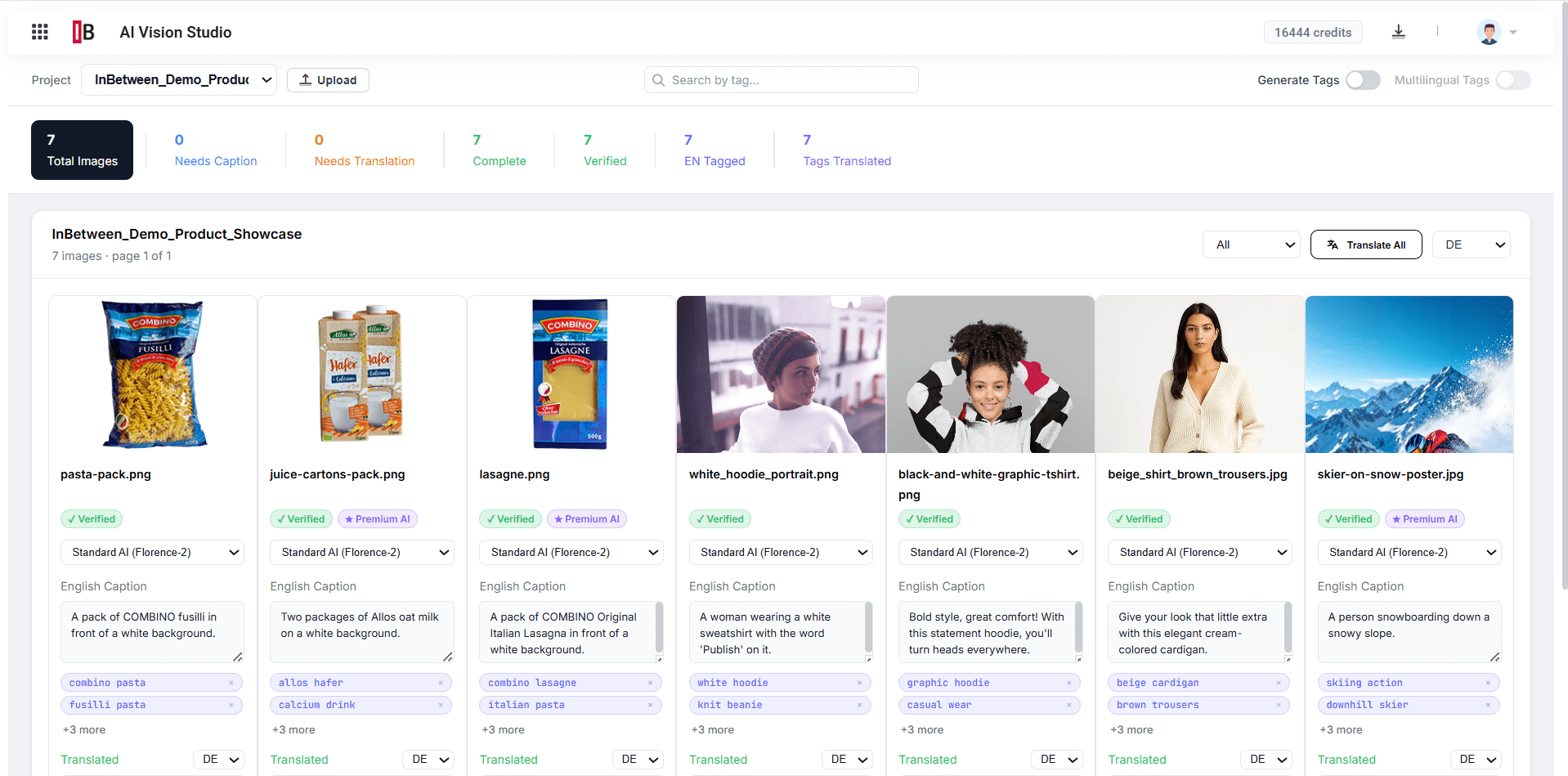
AI Vision Studio automatically analyzes product images and generates ready-to-use image content within seconds. This reduces repetitive manual work and helps teams prepare product information more efficiently.
Generated content can include
- Image descriptions
- Captions
- Alt texts
- Metadata
- Image tags and keywords
Create Multilingual and
SEO-Friendly Content
AI Vision Studio creates multilingual captions, metadata, and alt texts for use across international markets.
Ready for international markets
This helps companies provide relevant and consistent product information across languages and digital channels while reducing manual translation effort.
Prepared for better visibility
AI-generated tags and keywords also support the preparation of SEO-friendly image content.
Connect with Existing
Publishing Workflows
AI Vision Studio integrates with existing PIM, DAM, and InBetween publishing workflows.
It works with the product images already managed in these systems and enriches the available product information with AI-generated content.
The resulting descriptions, captions, metadata, and tags can be used across digital and print product communication.
Create once. Use everywhere.
Image-related content is created once and becomes available across multiple publishing processes, markets, and sales channels.
THE GENERATED CONTENT CAN BE USED ACROSS CHANNELS, INCLUDING:
- Product catalogs
- Technical datasheets
- Websites and product portals
- E-commerce platforms and online stores
- Other digital and print sales channels
Keep Editorial Control
Every generated text can be reviewed before publication.
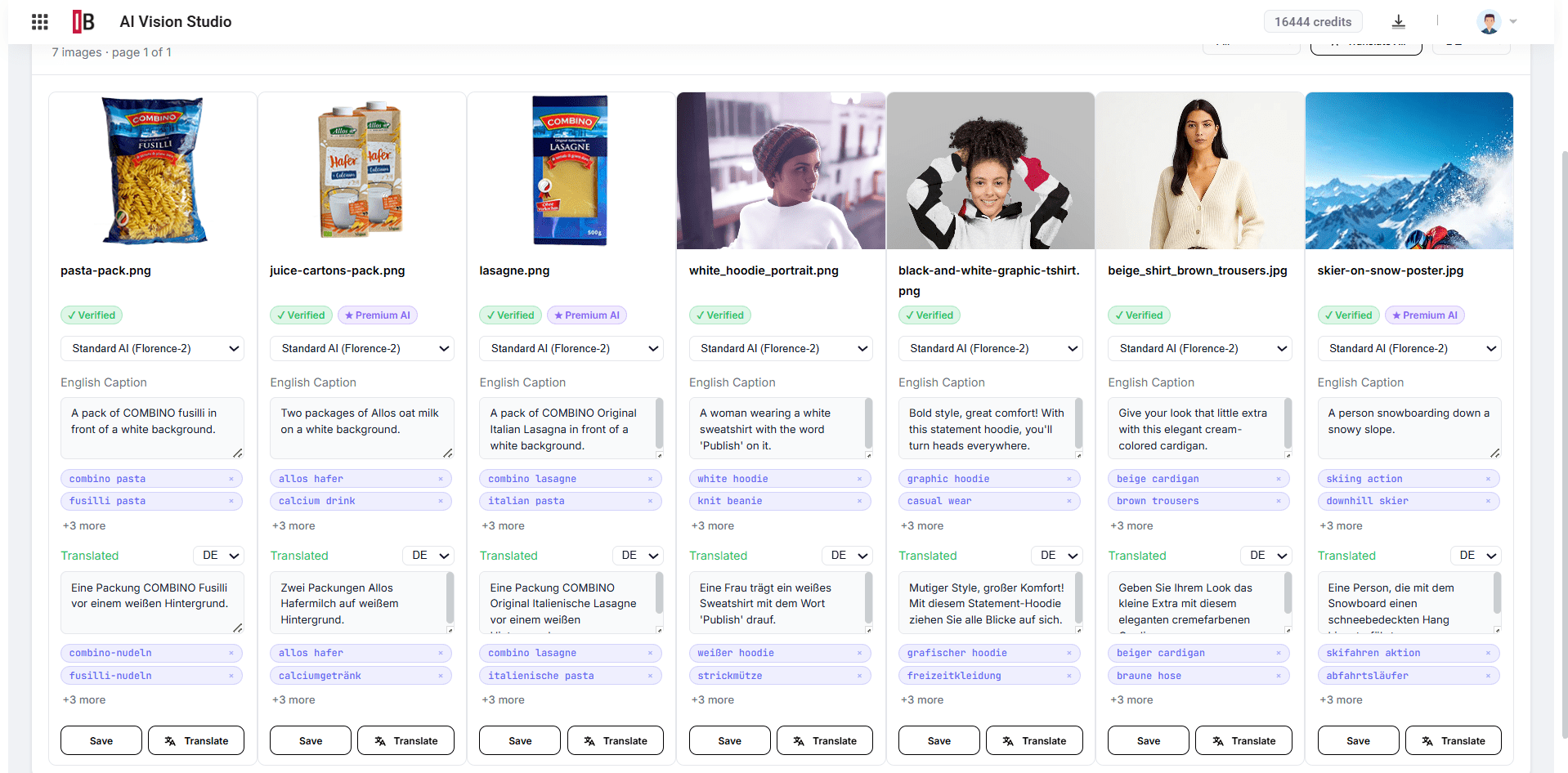
Your team can check and adjust the results to maintain accuracy, consistency, and compliance with your brand guidelines.
AI accelerates content creation while editorial control remains with your organization.
- Review all generated descriptions and captions
- Adjust terminology to match brand guidelines
- Verify language and market-specific content
- Approve results before publication
From Product Image
to Approved Content
Use Existing Product Images
AI Vision Studio works with product images managed in your PIM, DAM, or publishing environment.
Analyze Image Content
The solution automatically analyzes the visual content of each product image.
Generate the Required Texts
Image descriptions, captions, alt texts, metadata, tags, and keywords are created within seconds and can be provided in multiple languages.
Review and Publish
Your team reviews the generated content before making it available to catalogs, datasheets, websites, e-commerce platforms, and other channels.
Get More from Every
Product Image
Reduce manual image-content creation
Create multilingual captions, metadata, and alt texts
Generate SEO-friendly image tags and keywords
Reduce translation and localization effort
Maintain consistent content across multiple channels
Integrate with existing PIM, DAM, and publishing workflows
Review every generated text before publication
Accelerate international product launches
Get more from your
product images
Create multilingual, ready-to-use content from your existing product images and make it available across your publishing workflows.
FAQ
Frequently Asked Questions
Practical answers about product image content, image SEO, accessibility, localization, and visibility in AI-powered search.
Does AI Vision Studio replace a PIM or DAM system?
No. AI Vision Studio complements the PIM and DAM systems already used to manage product information and digital assets. It analyzes existing product images, generates image-related content, and makes the results available to connected publishing workflows. The original product information and image assets remain managed within the existing system landscape.
What is the difference between an image description, a caption, alt text, metadata, and image tags?
An image description explains what is visible in an image. A caption appears alongside the image and provides information for the reader. Alt text describes an image for screen readers and situations in which the image cannot be displayed. Metadata stores information associated with the image, while tags and keywords help classify and organize the asset.
How can image descriptions and alt text support image SEO?
Accurate image descriptions, captions, and alt text help search engines understand the subject of an image and its relationship to the surrounding page content. Relevant tags and metadata can also support consistent image classification. The generated texts should remain useful, specific, and natural—keyword stuffing does not improve image SEO and can reduce content quality.
How can structured image content improve visibility in AI-powered search?
AI-powered search systems use crawlable and indexed web content to identify relevant information and generate grounded answers. Clear image descriptions, consistent product terminology, meaningful alt text, and well-structured page content can make product information easier to interpret and retrieve. However, no content format can guarantee a citation, ranking, or appearance in an AI-generated response.
Can AI-generated alt text support accessibility?
Yes, if it accurately communicates the image’s purpose and relevant visual content. The right alt text depends on how the image is used. Generated alt text should therefore be reviewed for technical accuracy, context, and terminology before publication.
Should image descriptions and metadata be localized for each market?
Yes. Captions, alt text, and metadata should match the language and terminology of the target market. Localization keeps image content consistent with the surrounding page or publication. Product names, technical terms, and market-specific wording should be reviewed before publishing.
What should teams review before publishing AI-generated image content?
Verify that each text accurately reflects the image, uses approved product and brand terminology, matches the target language and channel, and avoids unnecessary keyword repetition. Check alt text for accessibility and confirm that tags and keywords are relevant. This review combines faster content creation with editorial and brand control.
About InBetween
InBetween Deutschland GmbH, a global leader in digital publishing solutions, has been at the forefront of product and brand professionalisation for more than 20 years. Our software automatically creates catalogs, sales folders, price lists, datasheets, and more, all based on your latest product data. This saves you significant and measurable time and costs, while increasing the quality of your output documents by reducing manual errors. Our solution offers both fully or partially automated publications, personalised for different customer segments, in a variety of output formats and languages suiting your company.